
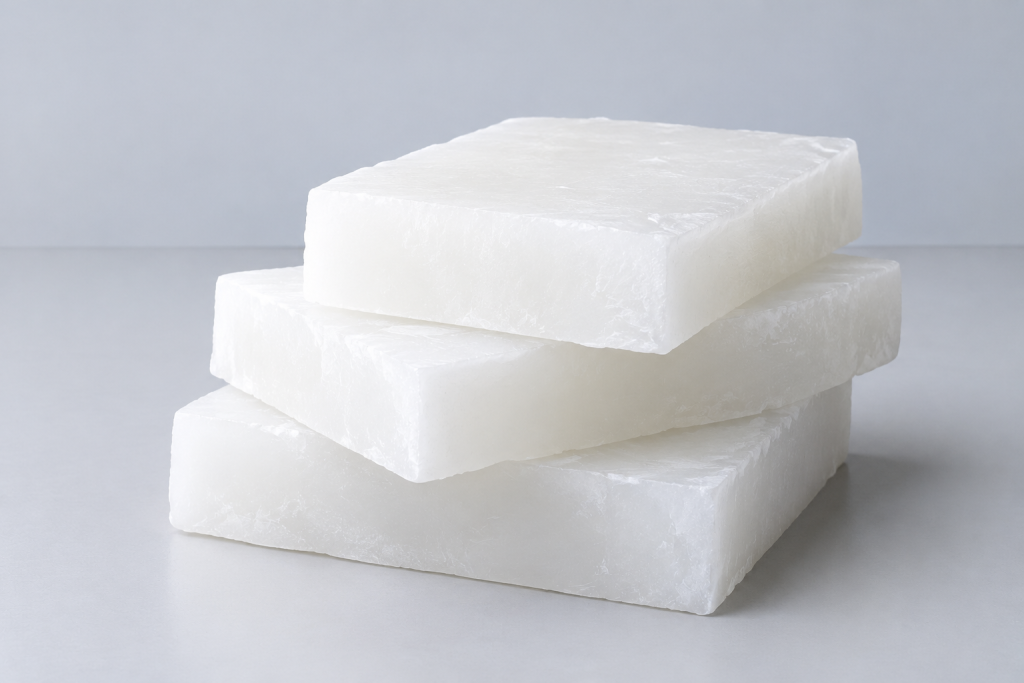
Paraffin Wax Melting Point
Choosing the right paraffin wax is about more than price and appearance. For industrial buyers, manufacturers, and importers, the melting point of paraffin wax is one of the key specifications that determines whether a grade is suitable for a particular application.
A wax with the wrong melting point may affect production efficiency, product stability, and final quality. Understanding the differences between melting point ranges helps buyers select the right grade and compare suppliers more accurately.
What Is the Melting Point of Paraffin Wax?
The melting point of paraffin wax is the temperature range at which the wax changes from a solid into a liquid. It is an important physical property that influences how the wax behaves during processing, storage, and final use.
Paraffin wax is available in different grades with different melting characteristics. The appropriate grade depends on the intended application, production conditions, and required product performance.
In commercial trading, buyers may encounter paraffin wax grades with melting points around 52–54°C, 58–60°C, and 60–62°C. These are examples of commonly traded ranges, not universal classifications. Actual specifications vary by producer and product grade.
It is important to confirm whether a supplier reports a melting point, congealing point, or another temperature-related test result. These measurements are not necessarily interchangeable.
Common Paraffin Wax Melting Point Grades
Different melting point ranges can serve different industrial requirements. The following table provides a general guide.
| Typical melting point range | Potential applications |
|---|---|
| 52–54°C | Selected candle formulations, coatings, and general-purpose applications |
| 58–60°C | Candles, packaging, and various industrial uses |
| 60–62°C | Applications requiring a higher-melting wax, depending on the formulation |
| Above 62°C | Selected specialized industrial applications, subject to technical requirements |
These applications are indicative rather than fixed rules. A wax grade’s suitability also depends on oil content, penetration, viscosity, color, odor, and other properties.
For example, two paraffin wax products with similar melting points may perform differently if their oil contents or other specifications differ. Buyers should therefore evaluate the complete technical specification rather than selecting a product based on temperature alone.
Why Does Paraffin Wax Melting Point Matter?
1. Processing temperature and production efficiency
Melting point influences the temperature required to melt and process paraffin wax. Selecting an appropriate grade can help manufacturers establish suitable operating conditions and manage energy use.
However, the ideal processing temperature is not always identical to the stated melting point. Actual operating conditions depend on the equipment, formulation, and production process.
2. Product stability
In applications where products are exposed to heat, the melting characteristics of the wax can affect their resistance to softening.
For instance, candle manufacturers may consider melting point alongside hardness, oil content, fragrance compatibility, and the requirements of the finished candle. A higher melting point does not automatically mean a better product; it must match the intended formulation.
3. Storage and transportation
Temperature conditions during storage and transportation can influence the physical condition of paraffin wax. Buyers importing wax across different climates should consider local temperatures, packaging, warehouse conditions, and handling procedures.
The melting point is one factor in planning storage and logistics, but it should not be used as the only indicator of heat resistance or storage stability.
4. Consistency between batches
For manufacturers purchasing paraffin wax regularly, consistent specifications are essential. Variations in melting point or other technical properties may require production adjustments and can affect the final product.
Requesting a technical data sheet (TDS) and a certificate of analysis (COA) helps buyers evaluate the declared specifications of a particular grade and batch.
How to Choose the Right Paraffin Wax Melting Point
Before selecting a product, buyers should consider the following factors.
Identify the end application. Determine whether the wax will be used in candle manufacturing, packaging, coatings, board production, or another industrial process.
Check the required specification. Ask your production or quality-control team to define the acceptable melting point range and other essential parameters.
Review oil content. Oil content can influence wax properties and suitability for different applications. If your process requires a specific oil content, confirm it separately rather than assuming it from the melting point.
Compare the complete technical data. Review melting point, oil content, color, penetration, viscosity where relevant, and any other application-specific requirements.
Request documentation. A reliable supplier should be able to provide relevant product specifications and batch documentation, subject to the product and transaction.
Test the grade if necessary. For specialized manufacturing, laboratory evaluation or a production trial can help confirm that the selected grade performs as expected.
Does Higher Melting Point Mean Better Paraffin Wax?
Not necessarily. A higher melting point can be beneficial for applications that require specific heat-related properties, but it does not automatically indicate superior quality.
The best paraffin wax is the grade that meets the buyer’s technical requirements consistently and offers suitable performance for the intended application.
For example, a manufacturer requiring a lower-melting wax may not benefit from purchasing a higher-melting grade. Likewise, a buyer who needs a particular oil content or color specification should evaluate those properties independently.
When comparing suppliers, consider the complete specification, batch consistency, documentation, packaging, delivery terms, and overall suitability—not just the melting point or quoted price.
Buying Paraffin Wax From Iran: What Should Importers Check?
Iran is a source of paraffin wax for international industrial buyers. When evaluating Iran paraffin wax suppliers, importers should confirm the product grade, technical specifications, available quantity, packaging, and delivery arrangements before finalizing an order.
The following checks can help reduce uncertainty:
Product specifications: Confirm the required melting point and oil content, along with other relevant parameters.
Technical documents: Request the TDS and a batch-specific COA where available.
Packaging: Confirm the packaging type, net weight, and loading arrangements.
Logistics: Agree on the delivery location, transport method, lead time, and applicable Incoterms.
Commercial terms: Clarify payment terms, minimum order quantity, and quotation validity.
Import requirements: Check the destination country’s customs, documentation, and applicable trade-compliance requirements before placing the order.
A clear specification agreed upon before purchase helps both parties avoid misunderstandings and makes it easier to compare offers from different suppliers.
Frequently Asked Questions
What is the melting point of paraffin wax?
Paraffin wax is available in different melting point ranges. Common commercial examples include approximately 52–54°C, 58–60°C, and 60–62°C, although the actual range depends on the grade and supplier specification.
What is the difference between low-melting and high-melting paraffin wax?
The main difference is their melting behavior and suitability for particular applications. The appropriate choice depends on the production process and required finished-product properties. Other characteristics, such as oil content and penetration, must also be considered.
Is melting point the same as flash point?
No. Melting point describes the temperature-related transition from solid wax toward a liquid state. Flash point is a separate safety-related measurement associated with the formation of vapors that can ignite under specified test conditions. The two values serve different purposes.
How can I verify the melting point of paraffin wax before importing?
Ask the supplier for the product’s technical data sheet and a certificate of analysis, where available. Confirm the test method and whether the stated value refers to melting point or another measurement. For critical applications, independent testing may also be appropriate.
Which paraffin wax grade should I buy?
The right grade depends on your application, required melting point, oil content, other technical specifications, and commercial requirements. Providing these details to your supplier helps identify a suitable product.
Final Thoughts
The melting point of paraffin wax is an important purchasing specification, but it should always be evaluated alongside the product’s other technical properties. Understanding your application requirements and verifying the supplier’s documentation can help you select a grade that fits your production process.
For international buyers sourcing paraffin wax, clear specifications and reliable supplier communication are essential steps toward a successful purchase. Before confirming an order, make sure the offered grade matches your technical requirements, packaging needs, and delivery arrangements.