
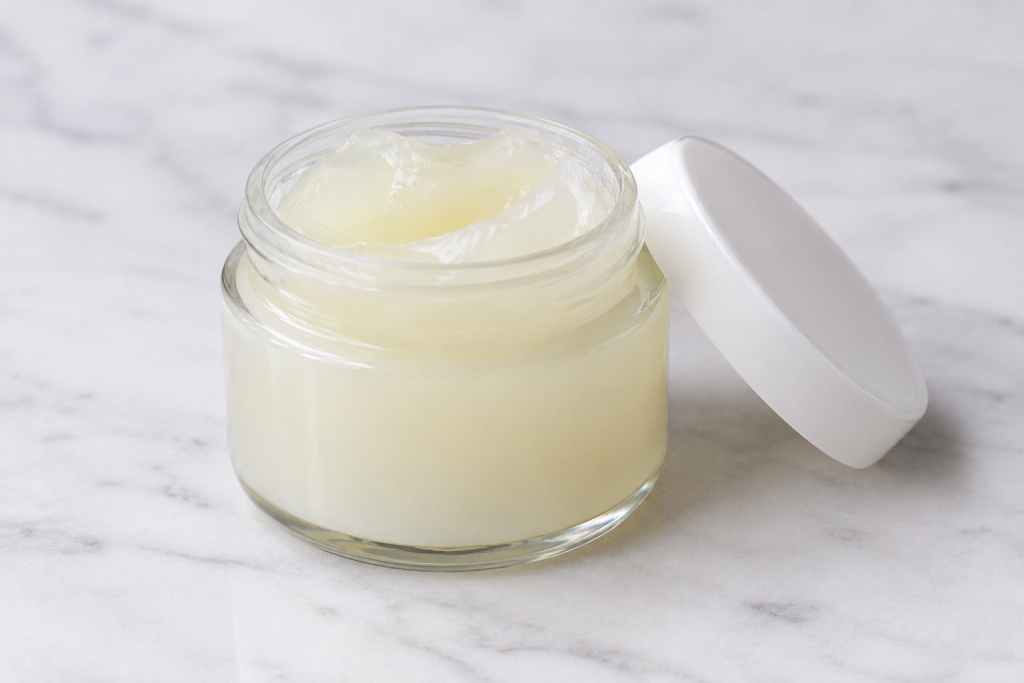
Iran Vaseline for Cosmetics: Grades and Product Requirements
Petroleum jelly is widely used in the cosmetics and personal care industry because of its protective, moisturizing, and skin-conditioning properties. It is commonly incorporated into products such as lip balms, body creams, moisturizers, hand creams, and protective skin ointments.
For cosmetic manufacturers and international buyers, choosing the right petroleum jelly is essential. Color, consistency, purity, odor, and other technical characteristics can influence the quality and appearance of the finished product.
Iran is one of the sourcing markets that international buyers may consider when purchasing petroleum jelly in bulk. However, selecting a suitable Iran Vaseline product requires more than comparing prices. Buyers should understand the available grades and verify that the product meets their intended cosmetic requirements.
What Is Cosmetic Grade Petroleum Jelly?
Cosmetic grade petroleum jelly is a refined petroleum-derived product used as an ingredient in personal care and cosmetic formulations. It forms a protective layer on the skin, helping reduce moisture loss and leaving the skin feeling soft and smooth.
Unlike products intended exclusively for industrial applications, petroleum jelly for cosmetic formulations must meet the quality and safety requirements relevant to its intended use and destination market.
Its suitability depends on several characteristics, including:
Color and visual appearance
Odor
Consistency and texture
Purity and refining quality
Relevant chemical and physical specifications
Compliance with applicable cosmetic regulations
Buyers should always request technical documentation and confirm that the offered grade is appropriate for their formulation.
Main Grades of Iran Vaseline for Cosmetic Applications
Petroleum jelly is available in different grades and visual qualities. The most suitable option depends on the manufacturer’s formulation and product requirements.
1. White Petroleum Jelly
White petroleum jelly is a refined product with a white or off-white appearance. It is used in various personal care and cosmetic formulations where a light-colored petroleum jelly is suitable.
Common applications include:
Moisturizing creams and lotions
Hand and body care products
Protective skin formulations
Selected cosmetic balms
For cosmetic manufacturers, consistency, odor, texture, and product documentation are important considerations when purchasing white petroleum jelly.
2. Snow White Petroleum Jelly
Snow white petroleum jelly has a particularly bright white appearance and is suitable for cosmetic applications where product color is an important consideration.
It can be used in formulations such as:
Lip care products
Skin moisturizers
Protective balms
Buyers should not rely on appearance alone when evaluating snow white petroleum jelly. The product’s refining quality, relevant purity parameters, odor, and technical specifications should also be checked.
3. Ultra Snow White Petroleum Jelly
Ultra snow white petroleum jelly is a commercial grade description generally used for products with an especially bright white appearance.
It may be considered by cosmetic manufacturers who require a high visual whiteness standard for their formulations.
However, the term “Ultra Snow White” is not a universal international grade classification. Specifications can differ between manufacturers. Buyers should therefore request a technical data sheet (TDS) and certificate of analysis (COA) to understand the actual product characteristics.
4. Pharmaceutical Grade Petroleum Jelly
Pharmaceutical grade petroleum jelly is intended for applications requiring compliance with relevant pharmaceutical standards and specifications.
Depending on the formulation and applicable regulations, it may be used in certain ointments and topical products.
It is important to distinguish pharmaceutical grade from ordinary cosmetic grade. A product should not be marketed or purchased as pharmaceutical grade simply because it is white or highly refined. Buyers must verify the applicable pharmacopoeial specifications, manufacturing controls, documentation, and regulatory requirements.
Cosmetic Grade vs. Pharmaceutical Grade Petroleum Jelly
Although cosmetic and pharmaceutical petroleum jelly can have similar physical appearances, they are not automatically interchangeable.
| Feature | Cosmetic grade | Pharmaceutical grade |
|---|---|---|
| Main purpose | Cosmetics and personal care | Pharmaceutical applications |
| Quality requirements | Appropriate cosmetic specifications | Relevant pharmaceutical standards |
| Documentation | TDS and relevant quality documents | Applicable pharmacopoeial and quality documentation |
| Regulatory requirements | Destination-market cosmetic regulations | Pharmaceutical requirements where applicable |
| Typical applications | Creams, balms, moisturizers | Ointments and approved topical formulations |
The appropriate grade depends on the final product and its regulatory classification. Cosmetic manufacturers should confirm the requirements of their target market before purchasing.
Important Specifications When Buying Iran Vaseline for Cosmetics
Before placing a bulk order, cosmetic manufacturers should evaluate the product’s technical specifications carefully.
1. Color and Appearance
Color is particularly important in cosmetic formulations. White and snow white petroleum jelly are commonly considered when manufacturers need a light-colored ingredient.
Buyers should request product samples when color consistency is critical.
2. Odor
Odor can influence the suitability of petroleum jelly for cosmetic applications, particularly in products intended for direct skin contact.
A suitable cosmetic grade should meet the buyer’s odor requirements. Buyers should confirm this characteristic through product evaluation and supplier documentation.
3. Consistency and Texture
Petroleum jelly is known for its semi-solid consistency. Its texture and firmness can affect how easily it blends into cosmetic formulations and how the finished product feels during application.
Manufacturers should check the relevant consistency measurements and compare samples where necessary.
4. Purity and Refining Quality
The refining quality of petroleum jelly is an important consideration for cosmetic and personal care applications.
Buyers should request relevant analytical information and quality documentation rather than relying solely on product appearance or general descriptions such as “high purity.”
5. Technical Documentation
Professional suppliers should be able to provide relevant product documents, depending on the grade and transaction.
Common documents include:
Technical Data Sheet (TDS)
Certificate of Analysis (COA)
Safety Data Sheet (SDS)
Relevant compliance or quality declarations, where applicable
These documents help buyers compare products and determine whether a particular grade meets their formulation requirements.
Common Cosmetic Applications of Petroleum Jelly
Petroleum jelly is a versatile ingredient used in different personal care and cosmetic products.
Lip balms: It helps create a protective layer and supports moisture retention in lip care formulations.
Moisturizing creams: It is used as an occlusive ingredient to help reduce moisture loss from the skin.
Body lotions and creams: Depending on the formulation, petroleum jelly can contribute to the product’s protective and conditioning properties.
Hand creams: It can help protect dry skin and improve the feel of moisturizing formulations.
Protective balms: Its semi-solid consistency makes it useful in products designed to form a protective layer on the skin.
The final formulation, ingredient compatibility, and applicable product regulations determine which grade is appropriate.
How to Choose a Reliable Iran Vaseline Supplier
When sourcing petroleum jelly from Iran, international buyers should evaluate suppliers based on product quality, technical transparency, supply capacity, and commercial conditions.
Consider the following points before making a purchasing decision:
Confirm the product grade: Specify whether you require white, snow white, ultra snow white, cosmetic grade, or pharmaceutical grade petroleum jelly.
Request technical specifications: Review the TDS and relevant batch documentation.
Evaluate product samples: Check appearance, odor, consistency, and suitability for your formulation.
Confirm packaging: Discuss available packaging options, net weight, and loading arrangements.
Check supply capacity: Make sure the supplier can meet your required quantity and delivery schedule.
Clarify export arrangements: Confirm transport method, commercial terms, export documentation, and destination-market requirements.
A clear product specification agreed upon before ordering can help prevent misunderstandings and make long-term purchasing more reliable.
Packaging and Bulk Purchasing of Iran Petroleum Jelly
Packaging is another important factor for international buyers, particularly cosmetic manufacturers purchasing petroleum jelly in large quantities.
Depending on the supplier’s available options, petroleum jelly may be supplied in industrial drums or other suitable bulk packaging.
For example, Faragam Paraffin offers petroleum jelly in 5 kg steel drums for relevant product orders. Buyers should confirm current availability, packaging specifications, and loading arrangements directly before placing an order.
When comparing suppliers, consider not only the price per kilogram but also packaging quality, handling requirements, net weight, and transportation costs.
For international buyers sourcing Iran Vaseline, the best approach is to compare technical specifications, request product documentation, evaluate samples, and confirm packaging and export arrangements before placing a bulk order.
Faragam Paraffin supplies petroleum jelly for international buyers and can discuss available grades, product specifications, and packaging requirements based on individual purchasing needs.