
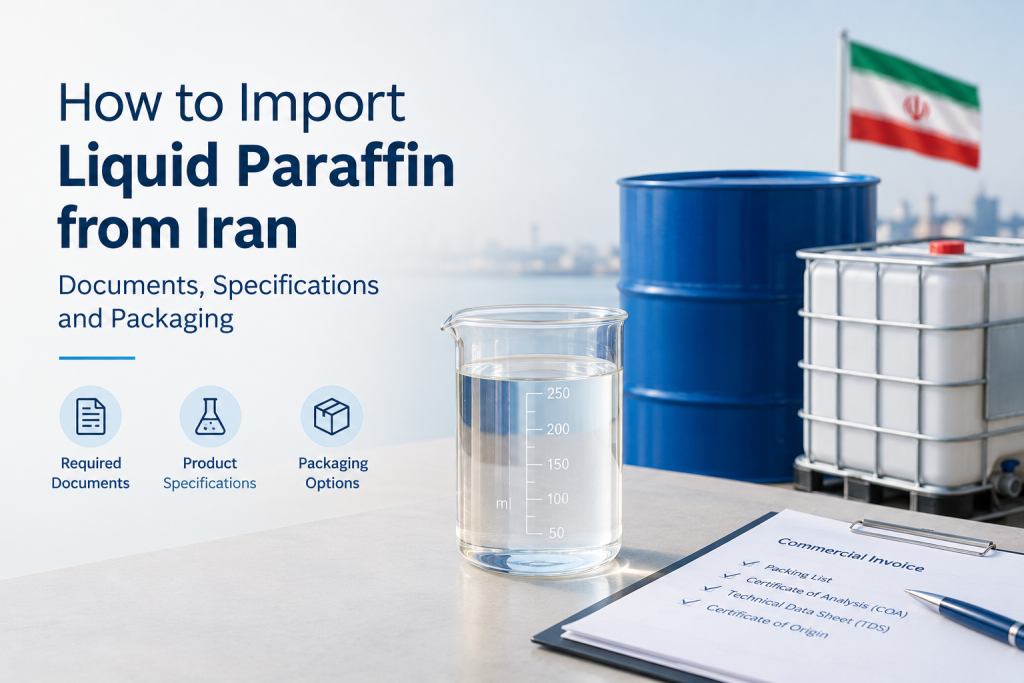
How to Import Liquid Paraffin from Iran
How to Import Liquid Paraffin from Iran: Documents, Specifications and Packaging
Sourcing liquid paraffin from Iran can be an option for international buyers looking for petroleum-derived materials for industrial, cosmetic or other specialized applications. However, successful importing involves more than finding a supplier and negotiating a price. Buyers must confirm the correct product grade, review technical documents, check import regulations and agree on packaging and delivery terms before placing an order.
Whether you are a distributor, manufacturer or procurement manager, understanding these steps can help you evaluate suppliers and reduce avoidable problems during an international purchase.
1. Identify the Right Grade of Liquid Paraffin
Before requesting a quotation, define how the product will be used. Liquid paraffin is available in different grades, and products sold under the same general name may have different technical properties and regulatory suitability.
The main categories buyers may encounter include:
Industrial Grade Liquid Paraffin
Industrial grade liquid paraffin is intended for technical and manufacturing applications where its properties meet the requirements of the process.
Depending on the specification, potential uses may include industrial formulations, selected lubrication applications and other manufacturing processes. Buyers should confirm the required viscosity, purity and performance characteristics before ordering.
Cosmetic Grade Liquid Paraffin
Cosmetic grade liquid paraffin is used in personal-care and cosmetic formulations when it meets the applicable quality requirements.
Potential applications include creams, lotions, body oils and other skincare products. Cosmetic manufacturers should confirm the product specification and documentation required for their target market.
Food Grade Liquid Paraffin
Food-grade liquid paraffin is suitable only for specific applications where the product meets the applicable regulatory requirements.
Not every mineral oil product is suitable for food-related use. Importers should confirm the permitted application, relevant purity requirements and destination-country regulations before purchasing.
2. Check the Technical Specifications Before Ordering
One of the most important steps when importing liquid paraffin from Iran is verifying that the offered product matches your technical requirements.
A supplier’s product description may provide a general overview, but professional buyers should request a Technical Data Sheet (TDS) and, where available, a batch-specific Certificate of Analysis (COA).
Depending on the grade, important parameters may include:
-
Viscosity: Indicates the liquid’s resistance to flow and helps determine its suitability for a particular process.
-
Density: Useful for product identification, handling and certain purchasing calculations.
-
Appearance and color: Relevant to applications where visual consistency matters.
-
Odor: May be important for cosmetic and other formulations.
-
Purity and refining characteristics: Should be assessed against the requirements of the intended use.
-
Flash point: Relevant to handling, storage and transport safety.
-
Regulatory compliance: Particularly important for cosmetic, pharmaceutical and food-related applications.
The exact parameters and acceptable limits depend on the grade. Do not assume that all liquid paraffin products share the same specification.
3. Request the Essential Import Documents
Documentation helps buyers verify the product, arrange transportation and comply with customs requirements.
The documents needed for a liquid paraffin import transaction vary according to the destination country, product classification, transport method and intended use.
Common documents include:
Commercial Invoice
The commercial invoice identifies the seller and buyer, describes the product and records the transaction value, currency and agreed commercial terms.
Ensure that the product description and quantities are consistent with the purchase order and shipping documents.
Packing List
The packing list describes the shipment’s packaging, number of packages, net weight, gross weight and other relevant details.
It helps the buyer, freight forwarder and customs authorities verify the physical shipment.
Certificate of Analysis (COA)
A COA provides analytical results for a product batch. It helps the buyer compare the supplied material with the agreed specification.
For technical procurement, confirm which parameters will be reported and whether the document relates to the actual batch being supplied.
Technical Data Sheet (TDS)
The TDS describes the product’s principal characteristics and technical specifications. It helps the buyer determine whether the grade is appropriate for the intended application.
Safety Data Sheet (SDS)
The SDS provides relevant information about hazards, safe handling, storage, emergency procedures and other safety considerations.
Certificate of Origin
A Certificate of Origin may be required by the importing country, the buyer or the applicable trade arrangement. Confirm whether it is needed and which issuing authority or format is acceptable.
Transport Documents
The transport documents depend on how the product is delivered. For example, a sea shipment may require a bill of lading, while road transport commonly involves a CMR consignment note where applicable.
4. Confirm Import Regulations and Product Classification
Before placing an order, check whether liquid paraffin can be imported under the proposed transaction and whether any restrictions apply to the product, its country of origin, the supplier, the payment route or the parties involved.
This step is particularly important for products originating in Iran because trade restrictions and sanctions can affect different jurisdictions, entities, banks and transport providers.
The relevant rules depend on the importing country and the specific transaction. Do not assume that a product is permitted merely because it is commercially available.
Buyers should confirm:
-
The appropriate customs classification and tariff treatment
-
Import permits or registrations, if required
-
Applicable product standards and labeling requirements
-
Country-of-origin documentation
-
Restrictions affecting the seller, banks, carriers or other transaction parties
-
Any additional requirements for cosmetic, pharmaceutical or food-related uses
Use qualified customs, legal and trade-compliance advisers when necessary. Product classification should be confirmed by the importer or customs broker rather than guessed from a general product description.
5. Choose Suitable Packaging for Liquid Paraffin
Packaging affects handling, storage, transport planning and the condition of the product on arrival.
The appropriate option depends on the quantity ordered, product specification, transport method and destination requirements.
Possible packaging arrangements may include:
-
Drums
-
Intermediate bulk containers (IBCs)
-
Bulk transport, where suitable and available
Not every supplier offers every packaging format. Confirm the available options, packaging material, capacity, closures, labeling and compatibility with the product before finalizing the order.
For larger quantities, also confirm how the product will be loaded, secured and transported. Packaging should comply with applicable transport requirements and be suitable for the product and journey.
6. Agree on Quantity, Delivery Terms and Payment
Once the grade, specification and documents are confirmed, the next step is to agree on the commercial terms.
Before issuing a purchase order, clarify:
-
Minimum order quantity
-
Price and quotation validity
-
Packaging and total net weight
-
Loading location and delivery destination
-
Production or loading lead time
-
Delivery terms under the agreed Incoterms® rule
-
Payment method and payment schedule
-
Responsibility for freight, insurance and customs clearance
-
Procedure for addressing discrepancies in the supplied product
For example, under some delivery arrangements, the buyer organizes the main transport, while under others the seller takes on additional transport responsibilities. The exact obligations depend on the agreed Incoterms® rule and named place.
For transactions involving Iran, confirm in advance that the proposed payment and transport arrangements are permitted and acceptable to the relevant service providers.
7. How to Evaluate an Iranian Liquid Paraffin Supplier
Choosing a supplier involves more than comparing quotations. A reliable business partner should be able to explain the offered grade, provide appropriate documents and communicate clearly about the order.
When evaluating an Iran liquid paraffin supplier, consider the following:
Product knowledge: Can the supplier explain the differences between the available grades and provide technical specifications?
Documentation: Can the supplier provide a TDS, relevant COA and SDS?
Specification agreement: Are the required product parameters clearly recorded in the quotation or purchase agreement?
Packaging and loading: Can the supplier confirm the available packaging and loading arrangements?
Communication: Are questions about quantity, delivery, documents and product quality answered clearly?
Compliance: Can the proposed transaction, including its parties, payment method and transport arrangements, be completed lawfully?
Requesting written confirmation of the agreed specification and delivery terms can help prevent misunderstandings later.
8. Importing Liquid Paraffin from Iran: A Practical Checklist
Use this checklist before confirming an order:
-
Define the intended application and required grade.
-
Review the TDS and agree on the technical specification.
-
Confirm the COA requirements.
-
Request the SDS and other necessary product documents.
-
Verify customs classification and destination-country import rules.
-
Confirm any applicable sanctions and trade-compliance requirements.
-
Agree on packaging, quantity and loading arrangements.
-
Confirm Incoterms®, payment terms and delivery responsibilities.
-
Check the final invoice, packing list and transport-document requirements.
Completing these checks before the order is finalized can help reduce documentation gaps, shipment delays and specification disputes.
Source Liquid Paraffin with Faragam Paraffin
Faragam Paraffin works with international B2B buyers sourcing petroleum-derived products. If you are looking for liquid paraffin, contact our team to discuss available grades, technical specifications, packaging options and export requirements.