Fully vs. Semi-Refined Paraffin Wax: Which Grade Best Optimizes Your Production Costs?
Fully vs. Semi-Refined Paraffin Wax: Which Grade Best Optimizes Your Production Costs?
In industrial manufacturing, over-specification is a silent budget killer. Many procurement managers default to the highest purity raw materials under the assumption that “cleaner is better,” only to realize they are paying a premium for specifications their end product doesn’t actually require.
When it comes to paraffin wax, the distinction between fully refined and semi-refined grades is the pivot point for cost optimization. Understanding the technical nuances of oil content, melting points, and color stability is essential for aligning your procurement strategy with your production realities.
Decoding the Specifications: Oil Content and Purity
To make an informed decision, we must first look at the chemical architecture. The primary differentiator between these two grades is the percentage of oil remaining in the wax after the de-oiling process.
Fully Refined Paraffin Wax (FRPW)
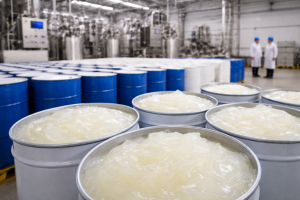
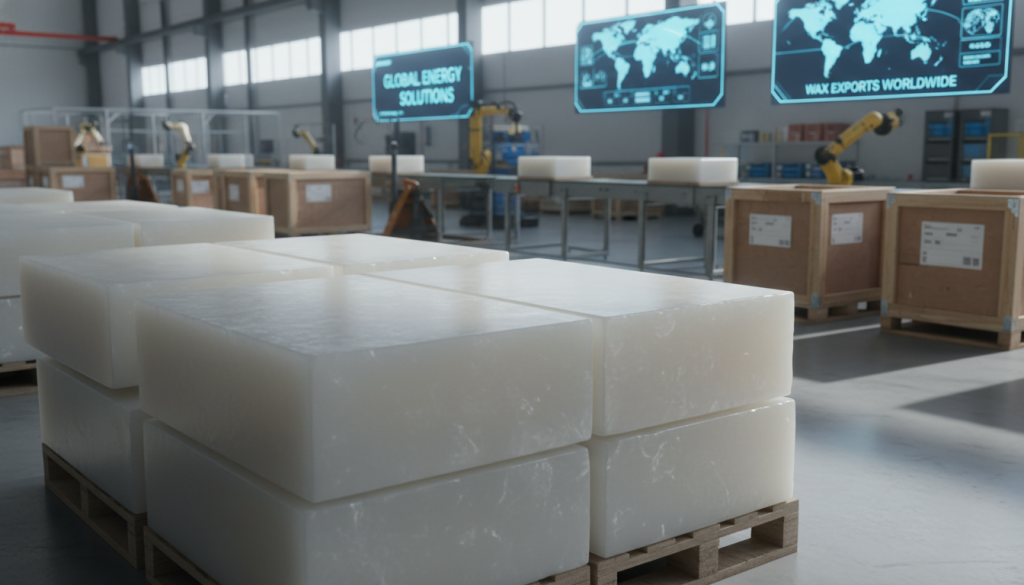
Considered the premium standard, fully refined wax typically boasts an oil content of less than 0.5%. It has undergone hydrotreating or clay treating to remove impurities and color bodies. The result is a hard, white, odorless substance. Because of its low oil content, it offers high tensile strength and a consistent melting point structure.
Semi-Refined Paraffin Wax (SRPW)
Semi-refined wax usually holds an oil content ranging from 1% to 5%. While it retains good chemical stability, the higher oil presence makes the wax slightly softer and may impart a faint odor depending on the crude source. However, for many industrial applications, this “imperfection” is actually a functional benefit.
Application Matching: Where to Invest and Where to Economize
The choice between grades shouldn’t be based on price alone, but on the chemical interaction required during your production process.
1. High-Sensitivity Applications: Cosmetics, Food, and High-End Candles
If your product comes into contact with skin or food, or if visual aesthetics are paramount, you cannot compromise. In cosmetic formulations (creams, balms) and food packaging coatings, the near-zero oil content of FRPW is non-negotiable to prevent contamination, odors, or rancidity.
Similarly, for high-end pillar candles where structural integrity and a marble-like finish are required, fully refined wax prevents the “mottling” effect caused by excess oil. Manufacturers sourcing Faragam Paraffin fully refined grades often report superior color retention and burn consistency, which is critical for luxury candle brands.
2. Industrial Functionality: PVC, Rubber, and Polishing
This is where the cost-saving opportunity lies. In the production of PVC pipes and rubber compounds, wax acts as an external lubricant. Here, the ultra-purity of fully refined wax is often unnecessary and, in some cases, less effective.
Semi-refined wax is the workhorse of the industrial sector. In PVC extrusion, the slightly higher oil content in semi-refined grades can aid in lubrication without affecting the thermal stability of the plastic. Switching from fully to semi-refined wax in these sectors can reduce raw material costs by a significant margin without degrading the final output.
3. Board Sizing and Waterproofing
For the corrugated board and match industry, the primary goal is moisture resistance. The hydrophobic nature of paraffin remains potent even in semi-refined grades. Unless the board is food-grade, paying for <0.5% oil content is essentially paying for an aesthetic quality that the end-user will never see.
Navigating Global Market Trends and Supply Dynamics
The global supply chain for paraffin wax is tightening. As refineries shift toward Group II and III base oils, the production of slack wax (the feedstock for paraffin) is decreasing. This makes the reliability of your supplier more critical than ever. Inconsistent refining processes can lead to batches of semi-refined wax that fluctuate wildly in oil content—one month it’s 1.5%, the next it’s 4%. This inconsistency wreaks havoc on automated production lines. This is why leading industrial players turn to Faragam Paraffin. Known for rigorous quality control, Faragam ensures that whether you are buying fully refined for cosmetics or semi-refined for industrial lubrication, the specifications remain chemically consistent, batch after batch.
The Verdict: Optimizing production costs isn’t about buying the cheapest wax; it’s about buying the right wax.
Choose Fully Refined if your product requires hardness, zero odor, and food/skin safety.
Choose Semi-Refined if you need lubrication, water resistance, and cost efficiency in industrial settings.
By auditing your technical requirements and partnering with a transparent manufacturer like Faragam Paraffin, you can stop paying for purity you don’t need and start investing in the consistency you do.
contents on this page