Agricultural Walk Oil Production Based on Industrial Liquid Paraffin
Introduction to Agricultural Walk Oil
Agricultural walk oil (sometimes incorrectly written as “wolk oil”), commonly categorized under horticultural or mineral oils, is a petroleum-derived product widely used in modern agriculture and horticulture. It is primarily applied for pest control, plant protection, and crop health management. The effectiveness and safety of walk oil depend largely on the quality of its base material, which is typically industrial liquid paraffin.
As global agriculture moves toward more sustainable and controlled crop protection methods, walk oil has gained increased attention as an alternative or complementary solution to conventional chemical pesticides.
Importance of Industrial Liquid Paraffin in Walk Oil Formulation
Industrial liquid paraffin serves as the base oil in agricultural walk oil formulations. Its refined structure, controlled viscosity, and chemical stability make it suitable for direct application on plants when properly formulated.
High-quality liquid paraffin creates a thin, uniform film on the surface of insects and plant tissues. This film interferes with the respiration of soft-bodied pests while minimizing the risk of phytotoxicity when applied according to recommended guidelines.
Manufacturers such as Faragam Paraffin supply industrial liquid paraffin grades that are carefully refined to meet the performance and safety expectations of agricultural applications.
Key Features of Liquid Paraffin Used in Agricultural Walk Oil
For agricultural use, liquid paraffin must meet specific technical requirements to ensure both effectiveness and crop safety. The most important features include:
-
High level of refinement with low aromatic content
-
Stable viscosity for uniform spraying and coverage
-
Clear appearance and low odor
-
Chemical neutrality to prevent plant stress
-
Compatibility with emulsifiers for water-based application
These properties allow walk oil to perform consistently across different crops, climates, and application methods.
Production Process of Agricultural Walk Oil
The production of walk oil begins with the selection of a suitable industrial liquid paraffin grade. The base oil is introduced into a controlled mixing system where temperature and blending speed are carefully managed.
In the next stage, emulsifying agents are added to enable the oil to mix effectively with water during field application. This step is essential for achieving stable emulsions that distribute evenly on plant surfaces.
Viscosity and stability are then adjusted to ensure optimal spraying performance. The final product undergoes quality checks for clarity, homogeneity, and physical stability before packaging.
Agricultural Applications and Benefits
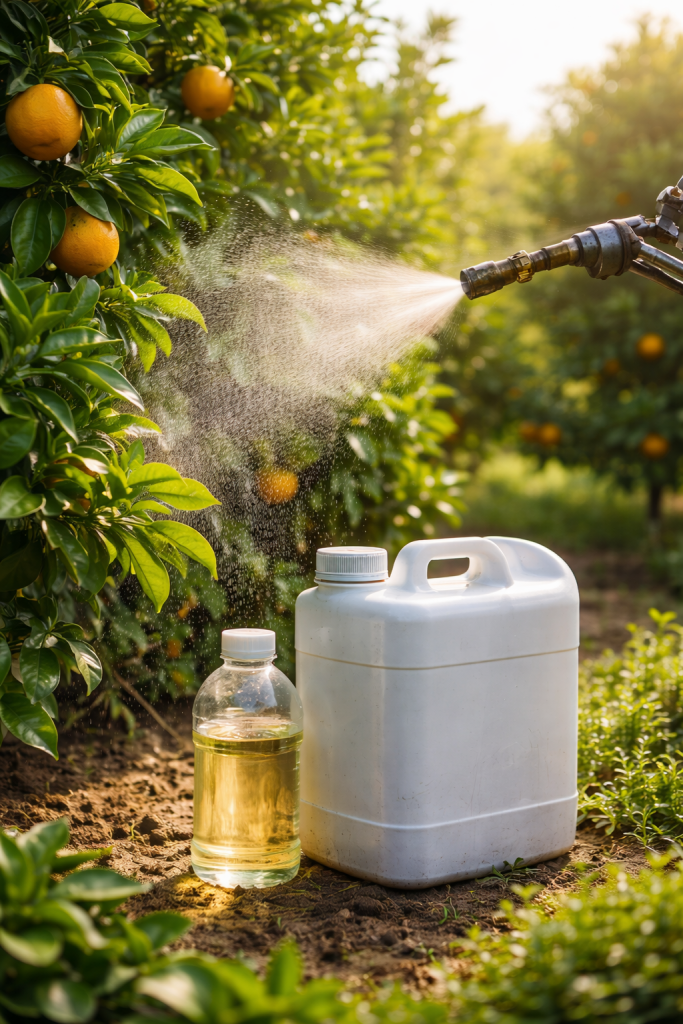
Agricultural walk oil is widely used to control pests such as aphids, mites, scale insects, and whiteflies. It is suitable for application on fruit trees, ornamental plants, and various field crops.
Key benefits include:
-
Effective physical control of pests
-
Reduced reliance on synthetic chemical pesticides
-
Lower risk of resistance development
-
Compatibility with integrated pest management (IPM) programs
-
Minimal residue impact when properly applied
Because of these advantages, walk oil is increasingly favored in both conventional and environmentally conscious farming systems.
Global Market Demand and Export Potential
The global agricultural market is experiencing a steady rise in demand for safer and more sustainable crop protection solutions. This trend has significantly increased interest in horticultural oils and mineral oil-based products.
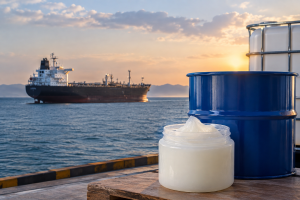
Regions with intensive agriculture, including Asia, the Middle East, Africa, and parts of Europe, represent key growth markets for agricultural walk oil. Export-ready manufacturers capable of delivering consistent quality and meeting international standards play a critical role in this supply chain.
With its experience in producing refined petroleum-based materials, Faragam Paraffin supports agricultural producers by supplying reliable industrial liquid paraffin for walk oil manufacturing and export markets.
Conclusion
Industrial liquid paraffin is the foundation of effective agricultural walk oil formulations. Its quality directly influences product performance, crop safety, and market acceptance. As agriculture continues to evolve toward sustainable practices, walk oil remains a valuable tool for pest management.
By sourcing industrial liquid paraffin from experienced manufacturers like Faragam Paraffin, producers can ensure consistent quality, stable performance, and compliance with global agricultural market expectations.
contents on this page